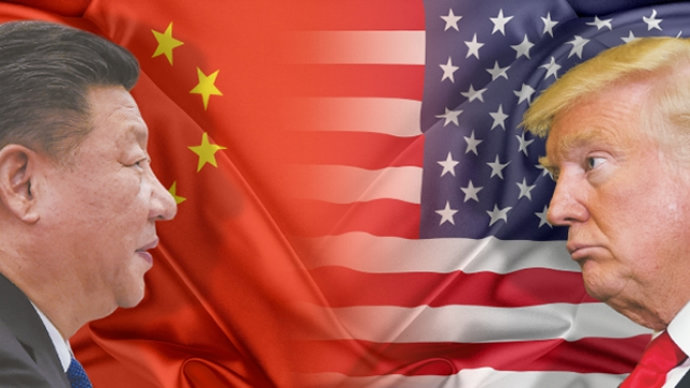
US, China Officials Agree on Plan That Awaits Xi, Trump’s Approval
The United States and China ended two days of high-stakes trade talks with a plan to revive the flow of sensitive goods — a framework that now awaits the blessing of Donald Trump and Xi Jinping. After about 20 hours of negotiations in London, U.S. Commerce Secretary Howard Lutnick said the two sides had laid out a framework for implementing the Geneva consensus that lowered tariffs last month.
“First of all, we have to get rid of the negatives,” he said. “Now, we can move forward to try to have positive trade, to increase trade.” Concluding a marathon round of bargaining that lasted more than 12 hours on Tuesday, Lutnick said China had pledged to speed up shipments of rare earth metals critical to U.S. auto and defense companies, while Washington would ease some of its own export controls, indicating progress had been made on two of the thorniest issues in bilateral relations.
The U.S. and Chinese delegations will take the proposals back to their respective leaders, according to China’s chief trade negotiator, Li Chenggang. The negotiations were “in-depth and candid,” he told reporters in brief remarks before midnight outside Lancaster House, a Georgian-era mansion near Buckingham Palace that is hosting this week’s meetings.
In additional comments Wednesday, He Lifeng, the Chinese vice premier leading Beijing’s delegation, called on the two countries to make good use of their trade negotiation mechanisms to “enhance consensus, reduce misunderstandings and strengthen cooperation” after the talks, state broadcaster China Central Television reported.
While the positive tone should reassure investors worried about the decoupling of the world’s largest economies, details were scarce and the deal could still be scuttled by top leaders. The discussions also did little to fix issues such as China’s large trade surplus with the U.S., and the belief in Washington that Beijing is dumping goods on its market.
Market reaction to the announcement was muted, with U.S. stock futures moving lower and the offshore yuan barely changing. China’s benchmark onshore stock index rose 0.8% at the close, the most in nearly a month.
“The market is likely to welcome the shift from confrontation to coordination,” said Charu Chanana, chief investment strategist at Saxo Markets. “We’re not out of the woods yet — it’s up to Trump and Xi to come to an agreement and enforce it.” China’s Commerce Ministry did not respond to a request for comment. Foreign Ministry spokesman Lin Jian said he had no further information to provide.
The London meeting comes shortly after Trump last week spoke with Xi for the first time since taking office, in an effort to halt relations that have soured over claims both sides have reneged on the Geneva accord. U.S. officials have accused China of stifling exports of magnets, while Trump officials have angered Beijing with new controls on chip design software, jet engines and student visas.
The spat highlights the growing role of export controls in modern trade wars, where access to rare earths or tiny microchips can give one economy leverage over its rivals. European trade officials and global automakers have also sounded the alarm in recent weeks about disruptions to supplies from China that are critical for fighter jets and electric vehicles.
Lutnick suggested they have found a way around the impasse. “There are a number of actions that the United States has taken when the rare earths aren’t coming,” he added. “You should expect it to work as President Trump has said, in a balanced way.”
Source: Bloomberg