What Happened at the US-China Meeting?
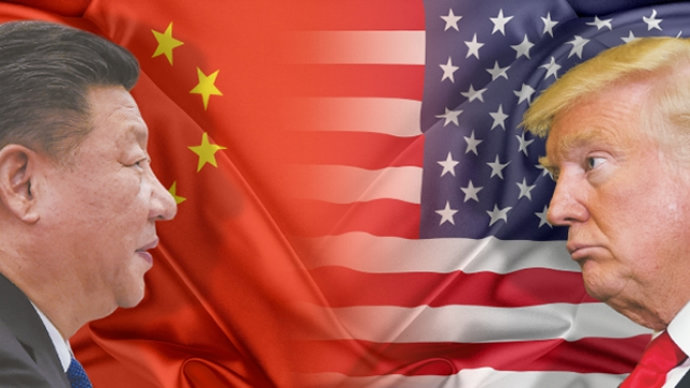
US and Chinese officials said Tuesday they had agreed on a framework to get their trade truce back on track and remove restrictions on China’s rare earth exports, while offering no sign of a lasting resolution to the long-running trade tensions.
At the end of two days of talks in London, US Commerce Secretary Howard Lutnick told reporters that the framework agreement was the “foundation” of a deal reached last month in Geneva to ease bilateral retaliatory tariffs that had reached triple-digit levels.
The Geneva deal, however, has faltered over China’s continued restrictions on exports of critical minerals, prompting the Trump administration to respond with its own export controls that prevent shipments of semiconductor design software, aircraft and other goods to China. Lutnick said the deal reached in London would remove restrictions on China’s rare earth and magnet exports and some recent U.S. export curbs “in a balanced way,” but gave no details after the talks ended around midnight London time (2300 GMT).
"We have reached a framework to implement the Geneva consensus and the call between the two presidents," Lutnick said, adding that the two sides will now go back to present the framework to their respective presidents for approval.
"And if it is approved, we will implement the framework," he said.
In a separate briefing, Chinese Vice Commerce Minister Li Chenggang also said a trade framework had been reached in principle that would be taken back to the U.S. and Chinese leaders.
U.S. President Donald Trump's volatile tariff policies have roiled global markets, sparking congestion and confusion at major ports, and costing companies tens of billions of dollars in lost sales and higher costs. The World Bank on Tuesday cut its global growth forecast for 2025 by four-tenths of a percentage point to 2.3%, saying higher tariffs and heightened uncertainty pose "significant headwinds" to nearly all economies.
The deal may prevent the Geneva accord from collapsing over conflicting export controls, but it does little to resolve deep differences over Trump’s unilateral tariffs and long-standing U.S. complaints about China’s state-led, export-driven economic model.
The two sides left Geneva with sharply different views on the terms of the deal and need to be more specific about what actions are needed, said Josh Lipsky, senior director of the Atlantic Council’s Center for Geoeconomics in Washington.
“They’re back to square one, but it’s a lot better than square one,” Lipsky added.
The two sides have until Aug. 10 to negotiate a more comprehensive agreement to ease trade tensions, or tariffs will rise again from about 30% to 145% on the U.S. side and from 10% to 125% on the Chinese side.
Source: Reuters