China, US Hold Second Day of Trade Talks in London
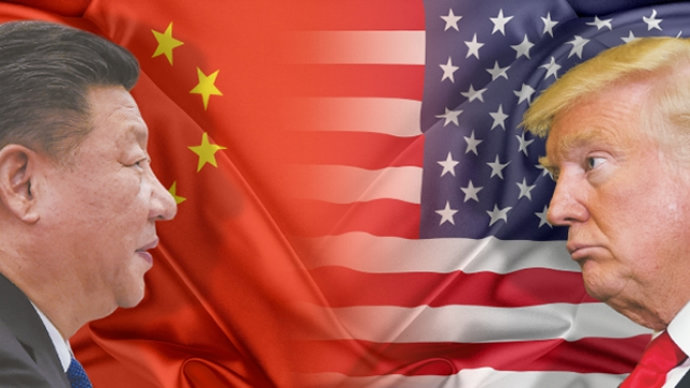
The US and China resumed talks for a second day in London, with financial markets jittery as the world’s largest economies try to agree on how to allow exports of key technology and industrial goods and avoid an escalation in their trade war.
The teams led by US Treasury Secretary Scott Bessent and Chinese Vice Premier He Lifeng reconvened just after 10:40 a.m. Tuesday at Lancaster House. The Georgian mansion near Buckingham Palace has hosted high-profile speeches by British prime ministers, remarks by central bank governors and a party for the British royal family.
Speaking to reporters as the officials arrived, US Commerce Secretary Howard Lutnick said the talks were going well and were expected to last all day Tuesday. President Donald Trump told reporters at the White House on Monday that “we’re doing very well with China. China is not easy,” adding that he had “nothing but good reports” from the nearly seven-hour session on Monday. Bessent said after the first day they had a “good meeting.”
Bond and currency markets are closely monitoring the talks for clues about the potential economic impact. The Bloomberg Dollar Spot Index, which has fallen sharply this year as trade tensions have dented confidence in U.S. assets, is hovering around its lowest level since 2023. The key issue this week is re-establishing the terms of the deal reached in Geneva last month, under which the U.S. understands that China will allow more rare earth shipments to reach American customers.
The Trump administration has accused Beijing of moving too slowly, threatening shortages in domestic manufacturing. In return, the Trump administration is prepared to roll back a series of recent measures targeting chip design software, jet engine parts, chemicals and nuclear materials, people familiar with the matter said. Many of those measures came in recent weeks as tensions between the U.S. and China escalated.
‘A win for China’
“The U.S. decision to lift some technology controls will be seen as a win for China,” said Dexter Roberts, a nonresident senior fellow at the Atlantic Council’s Global China Hub. “If you think back to the last administration, the possibility of the U.S. lifting any controls at all is almost unthinkable.”
A month ago, Beijing and Washington agreed to a 90-day truce until mid-August in their crippling tariffs to buy time to resolve their many trade disputes — from tariffs to export controls.
At the same time, Trump’s trade team is scrambling to secure bilateral deals with India, Japan, South Korea and several other countries that are racing to do so before July 9, when the U.S. president’s so-called reciprocal tariffs rise from the current 10% floor to much higher levels tailored for each trading partner.
Meanwhile, Chinese President Xi Jinping on Tuesday held his first phone call with newly elected South Korean President Lee Jae-myung and called for cooperation to safeguard multilateralism and free trade. “We should strengthen bilateral cooperation and multilateral coordination, jointly safeguard multilateralism and free trade, and ensure the stability and smoothness of global and regional industrial chains and supply chains,” Xi said, according to CCTV.
Source: Bloomberg