Xi Seeks to Win Over Southeast Asia as Trump Pauses Some Tariffs
President Xi Jinping’s first overseas trip of the year was meant to showcase China’s clout in the region. Now, President Donald Trump’s tariff threats have turned it into a push to keep Southeast Asian leaders from cutting deals at Beijing’s expense.
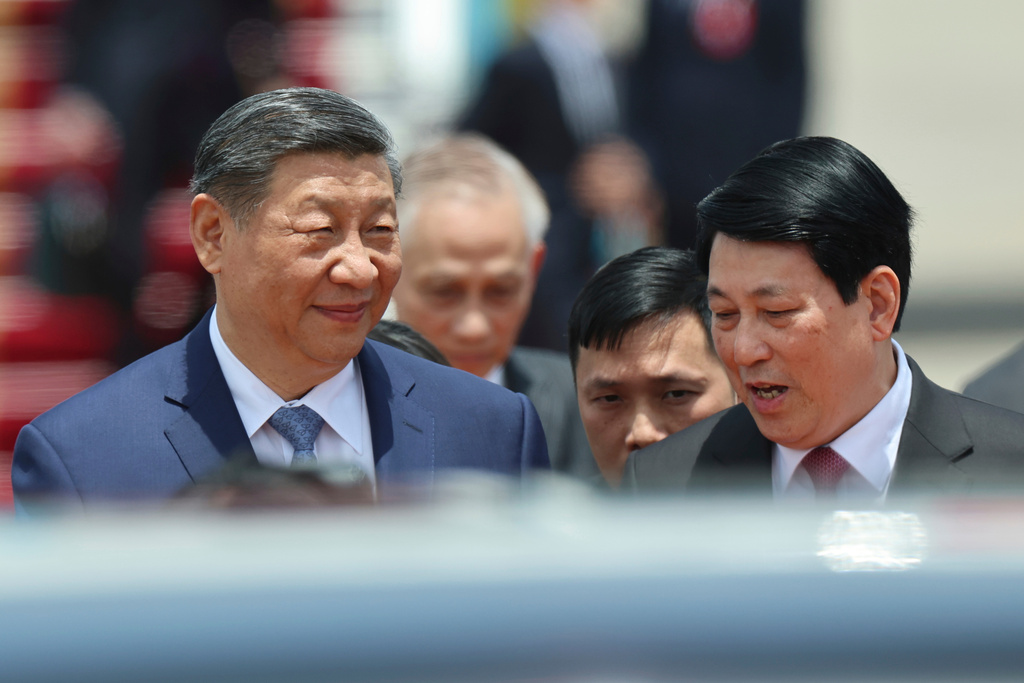
Xi landed in Vietnam on Monday days after Trump raised tariffs on China but gave everyone else a 90-day pause. In doing so, Trump is seeking to punish Beijing for retaliating, while enticing the smaller Asian economies to offer concessions to stave off drastic duty hikes. The Chinese leader is scheduled to visit Malaysia and Cambodia next.
“The fact that Xi Jinping is coming to visit these countries is very significant,” said Lynette Ong, professor of Chinese politics at the University of Toronto. “I would read it as Xi’s attempt to form alliances to fight back against the United States in the trade war.”
The Chinese leader will likely present China as a more stable partner than the US under Trump, whose shifting tariff policies have rattled markets. His visit also highlights the tricky position Southeast Asian nations face. They’ve become key routes for Chinese exports to reach the US since Trump’s tariffs in his first term. Now, as they seek exemptions from the latest duties, they’re also worried cheap Chinese goods could be redirected into their own markets.
In an article published in the Vietnamese newspaper Nhan Dan on Monday, Xi repeated his criticism of protectionism, saying China and Vietnam should jointly safeguard the multilateral trade system and stable supply chains.
“There are no winners in trade wars or tariff wars, and protectionism leads nowhere,” Xi wrote. He said China is ready to advance three cross-border railway lines in Vietnam’s north and welcomes more Vietnamese exports to the country and cooperation in 5G, artificial intelligence and other emerging technologies.
The Trump administration has signaled its terms as Vietnam, Malaysia and Cambodia actively seek to negotiate. His trade adviser Peter Navarro said countries must “stop allowing China to evade US tariffs by trans-shipping exports through your countries” in an article to the Financial Times, naming Vietnam and Cambodia as examples.
The demand places China’s neighbors in a precarious position: cut off a lucrative business channel with their largest trading partner, or face crippling US tariffs — 46% for Vietnam, 24% for Malaysia and 49% for Cambodia. There are signs that some are already budging, with Vietnam taking steps to crack down on origin of goods fraud, a move widely seen as a response to US concerns about Chinese transshipment abuses.
Source : Bloomberg