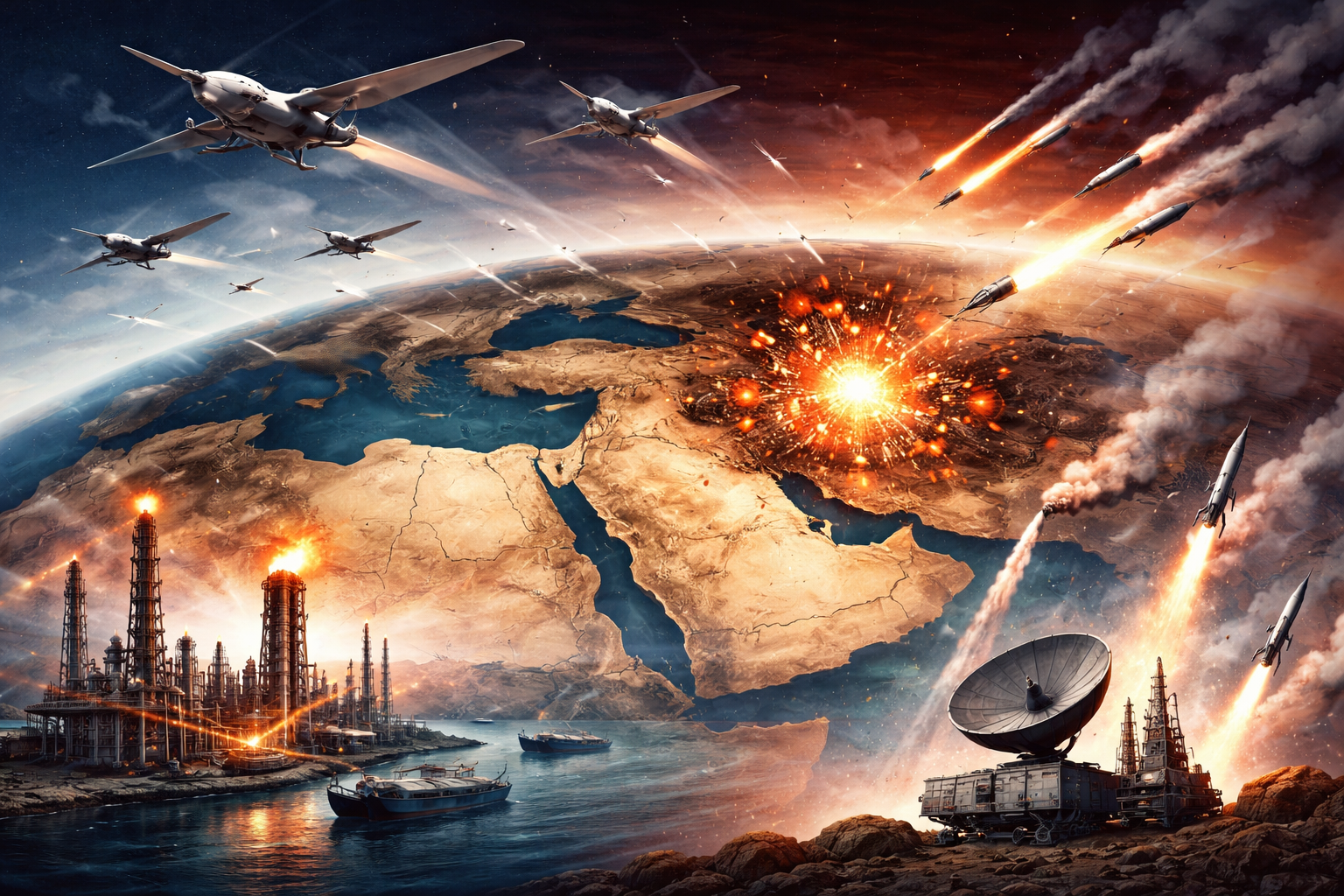
US-Israel Pressure Iran's Missile Capabilities, Drone War Tests Defense Resilience
After more than a week of attacks, the US and Israel appear to be accelerating efforts to cripple Iran's military machinery through strikes on thousands of targets, targeting missile launchers, command nodes, and communications networks. Initial calculations by the Human Rights Activists News Agency (HRANA) indicate more than 1,000 civilians have been killed, while Iran continues to retaliate with drones and missiles, highlighting the vulnerabilities of the coalition's defenses.
This conflict, in many respects, is shaped by the lessons of the brief June 2025 war involving the three countries. Dana Stroul of the Washington Institute for Near East Policy said the US and Israeli militaries used the period after last year's "12-Day War" to absorb lessons and develop joint operational plans, which then awaited political direction for execution.
One of the campaign's primary focuses is to disrupt Iran's ability to coordinate a major attack by destroying command nodes and missile launchers. US officials say more than 90% of Tehran's missile launchers have been destroyed, creating a significant barrier to Iran's ballistic missile strike capacity, while also emphasizing that launcher crews are more vulnerable and difficult to replace than missile platforms.
The US and Israel also relied on an approach to reduce the risk of retaliation by moving personnel and equipment out of range, a tactic described as “staying away from X.” Bloomberg Economics estimates that Iran fired more than 650 ballistic missiles in the first eight days, but many struck empty airfields and already largely evacuated US military installations, as Iran’s initial response was described as poorly coordinated.
Meanwhile, Iran is seen adapting by decentralizing operations, deploying launchers, and increasing the use of inexpensive, mass-produced, one-way drones. Drone attacks have forced the US to use much more expensive interceptors, demonstrating a cost dynamic also seen in Ukraine. CNAS researcher Stacie Pettyjohn believes Iran’s campaign highlights the challenges of “ubiquitous” defense, where attacks can target dozens of locations simultaneously, dramatically increasing the need for scale. (alg)
Source: Newsmaker.id