US Prepares Blockade, Iran Threatens Port Targets
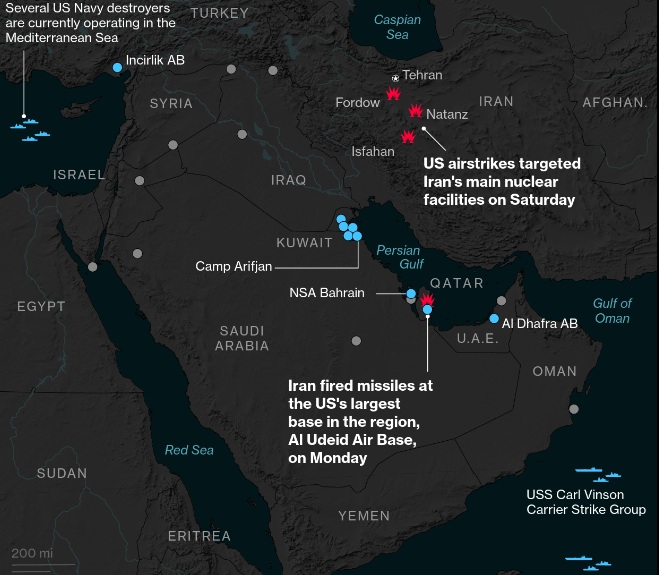
Iran has declared it will target all ports in and near the Persian Gulf if its own shipping hub is threatened, escalating the confrontation surrounding the Strait of Hormuz after the US announced plans to blockade Tehran-linked vessels. In a statement quoted by IRIB News on Monday (April 13), the Iranian Armed Forces said port security in the region is “for all or for none,” and called the US threat to block the strait “an act of piracy.”
The statement underscores Iran’s strategy to maintain control over the maritime route, a key hub for global energy flows—about a fifth of the world’s oil and LNG supplies typically pass through Hormuz. Iran has signaled its readiness to resume attacks on Gulf Arab ports if the US follows through on its plan to block all maritime traffic in and out of the Iranian shipping hub starting at 10:00 a.m. New York time on Monday.
The tensions come after direct US-Iran talks over the weekend ended without an agreement. US President Donald Trump said Sunday night he "doesn't care" whether Tehran returns to the negotiating table, announcing the blockade in response to the breakdown of the deal in Pakistan. Trump also threatened to resume US military strikes if Iran resists, warning that even "peaceful" ships could trigger a harsh response if fired upon.
Hormuz has been the focal point of more than six weeks of conflict between the US-Israel alliance and Iran, with the effective closure of the waterway since the war began rattling energy markets. Although a two-week ceasefire agreed on April 7, recent developments signal a renewed escalation, including the risk of extending to the Gulf's port and terminal network.
Energy markets responded quickly. Following Trump's announcement, oil and gas prices surged: Brent briefly rose to around US$104 per barrel on Monday, while European natural gas contracts briefly surged as much as 18%. This has triggered a rush for ready-to-ship oil cargoes amid tight physical markets. Geopolitically, the blockade also has the potential to increase US-China tensions, as China is said to be buying nearly all of Iran's oil.
Going forward, market players will focus on the technical details of enforcing the blockade, Iran's response to shipping and port traffic in the Gulf, the impact on physical oil/LNG flows, and the direction of global energy prices and inflation expectations, which are again sensitive to Hormuz headlines.
Source: Newsmaker.id