Trump Signals Earlier End to Iran War as Oil Risk Premium Starts to Ease
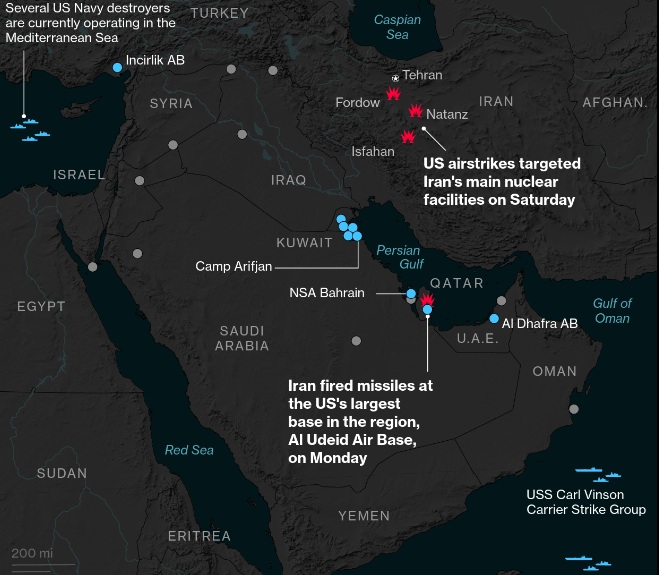
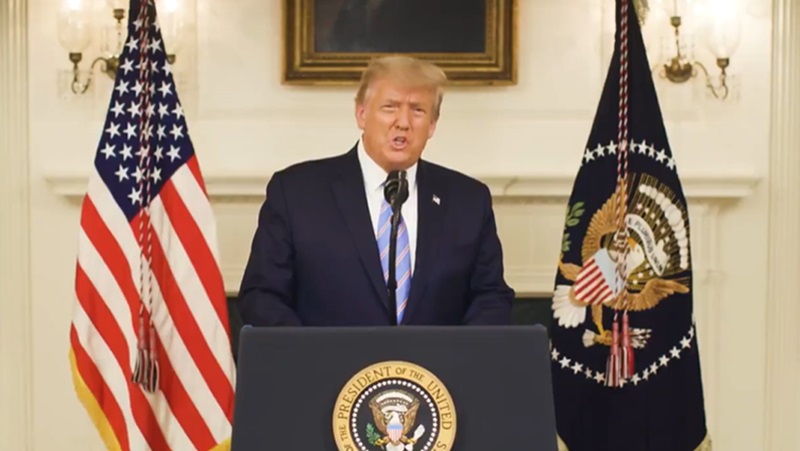
U.S. President Donald Trump said on Monday that the United States and Israel were making “significant progress” in their war against Iran and that the conflict could be resolved “very soon,” a signal that helped cool a surge in oil prices driven by disruptions across the Gulf. Trump added he did not expect fighting to end this week, but said operations were running ahead of schedule. He also said the U.S. Navy would escort tankers out of the Middle East to keep crude flows moving through the Strait of Hormuz, a key artery for global oil shipments and container traffic whose effective closure has pushed oil and gas prices higher and reignited inflation concerns.
Brent crude, which had climbed toward $120 a barrel early Monday, slipped back to around $91.50, though it was still described as up more than 50% this year amid heightened U.S.-Iran tensions. Even so, there were few signs the Strait of Hormuz would reopen quickly, with Iran continuing retaliatory drone and missile strikes across the region. On Tuesday, Saudi oil giant Aramco said it could ramp up a pipeline that carries crude to the kingdom’s west coast—bypassing Hormuz—to full capacity within a few days. Trump, meanwhile, said the U.S. and Israel were “crushing the enemy,” claiming Washington had struck 5,000 targets in Iran, cutting the country’s missile capability to a tenth of prior levels, and that the war’s military objectives were “pretty well complete.”
On the ground, Iran pressed ahead with attacks on Gulf Arab states on Tuesday. The United Arab Emirates said it was responding to a missile threat from the Islamic Republic hours after reporting a drone attack on its consulate in Iraq’s Kurdistan region. One person was killed in an attack on Manama, Bahrain, while Kuwait intercepted six drones. Still, early signals suggested strikes against some countries—including the UAE, described as the most frequently targeted Gulf state since the war began—may be easing. Iranian President Masoud Pezeshkian, quoted by semi-official Mehr news agency, said Tehran was prepared to reduce tensions on the condition that neighboring countries’ airspace, territory and waters are not used to launch attacks on Iran.
Domestic political pressure in the U.S. has also intensified. Trump campaigned on keeping the U.S. out of prolonged foreign wars, and an extended military campaign—alongside casualties and sustained high gasoline prices—could weigh on Republicans’ prospects of retaining control of Congress in the November midterm elections. Polling was cited as showing a majority of Americans oppose the war, while heavyweights in Trump’s Make America Great Again movement and several GOP politicians have condemned the conflict. Several countries—from Australia to South Korea and the U.K.—were said to be bolstering defenses of allied Gulf states or assessing requests to do so, as Arab countries remain the primary targets of Iran’s retaliatory strikes.
On the energy front, Trump said Iranian drone launches had fallen 83% from the conflict’s early days and that the U.S. had sunk more than 50 Iranian ships, while threatening additional strikes on “important targets,” including power plants. He also said he could temporarily waive “certain oil-related sanctions” to bring prices down, without offering details, beyond noting the issue was discussed in a phone call with Russian President Vladimir Putin. Trump reiterated that the administration was focused on keeping oil prices lower and argued prices had risen “artificially” because of the conflict. At the same time, he acknowledged lingering questions about leadership in Tehran and vowed he would not stop until the enemy is “totally” defeated.
The mix of de-escalation signals and renewed threats has kept market uncertainty elevated, with the status of the Strait of Hormuz remaining the central risk variable. Trump said ship traffic through Hormuz had increased and that he was “thinking about taking it over,” without specifying what actions that would entail. The effective closure of the strait was also said to have forced Saudi Arabia to cut output, following similar steps by the UAE, Kuwait and Iraq. On the humanitarian toll, the U.S. reported a seventh casualty on Sunday; two Israeli soldiers and about a dozen Israeli civilians were also reported killed. More than 1,300 Iranians were said to have died, based on an official figure that has not been updated for several days. Israel continued strikes in southern Lebanon targeting Hezbollah, with Lebanon’s health ministry reporting 486 deaths.
Iran also entered a new political phase after Ayatollah Mojtaba Khamenei was chosen as supreme leader, replacing Ali Khamenei, who was said to have been killed when U.S.-Israeli strikes began on Feb. 28. The 56-year-old leader was described as having close ties to the Islamic Revolutionary Guard Corps, which pledged full obedience. A Bloomberg Geoeconomics analyst said the selection suggested Iran was unlikely to shift course materially in the Middle East war, reinforcing the view that any de-escalation path will hinge on security calculations rather than political signaling alone.
Source: Newsmaker.id