Tariffs Canceled, Is There a Deal for Greenland?
US President Donald Trump has abruptly changed his tune: he said he would refrain from planned tariffs against European countries that reject his ambitions over Greenland. He argued that a "framework" of a future agreement had already been reached regarding the island—and he even extended it to the Arctic.
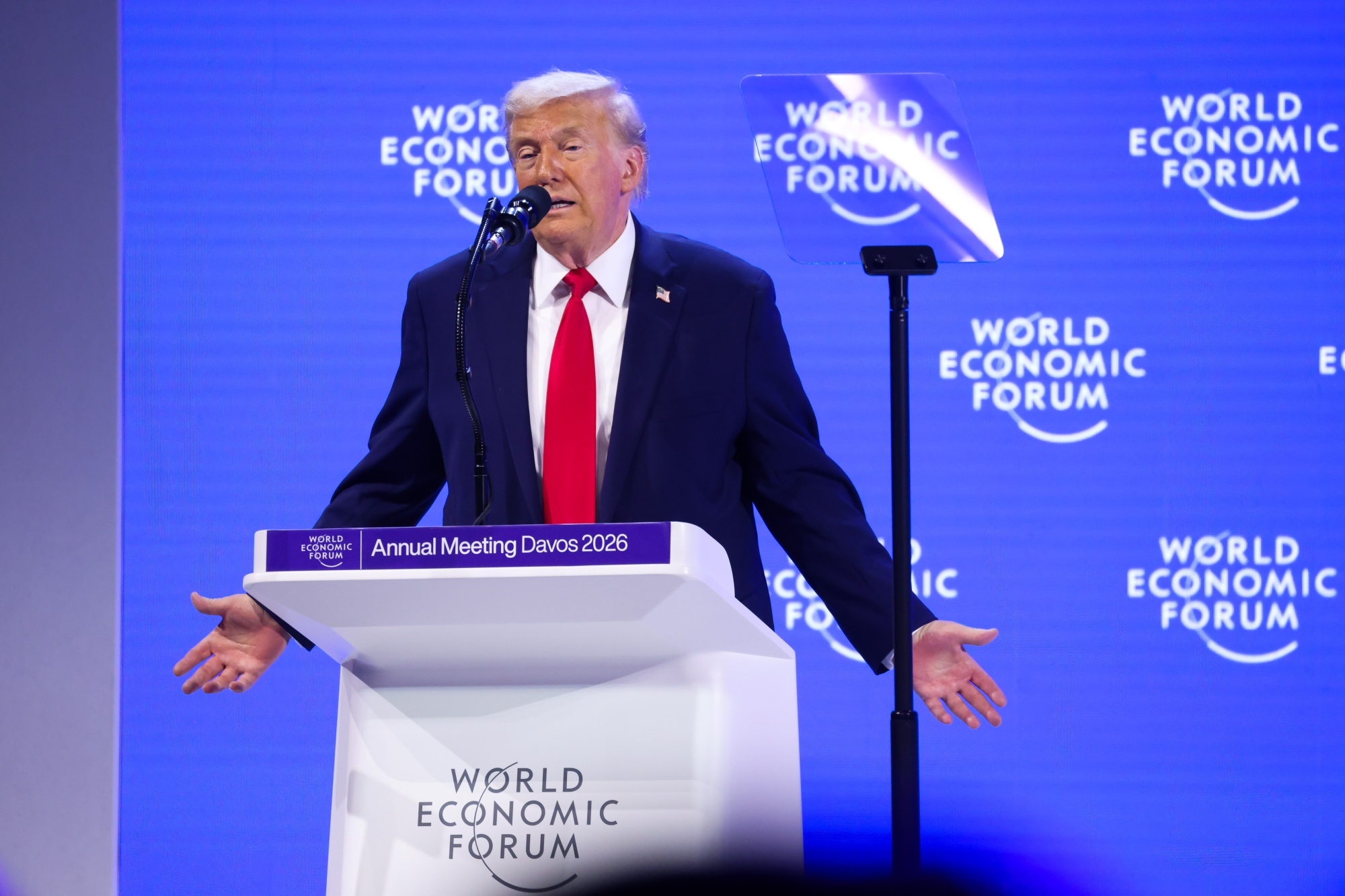
He made the statement via social media on Wednesday, shortly after meeting with NATO Secretary General Mark Rutte on the sidelines of the World Economic Forum (WEF) in Davos. This was a sharp U-turn, considering that Trump had previously used the threat of tariffs as a means of pressure on Europe.
The problem was that the content of the "framework" remained vague. Trump did not specify the parameters, and the situation was further complicated by Denmark's announcement that same day that it would not open negotiations leading to the handover of Greenland—a semi-autonomous territory still under the Kingdom of Denmark.
Despite the lack of details, the market immediately picked up on the big signal: the risk of tariffs had subsided. US stocks surged after news of the "tariffs temporarily canceled," US government bonds also rallied, and the dollar index rose intraday. In other words, the panic that had emerged the day before was beginning to subside.
From Copenhagen, Danish Foreign Minister Lars Løkke Rasmussen welcomed the development with relief, but maintained that Trump's ambition to control Greenland remained a red line for Denmark. He conveyed the message: the day ended better, but the core issues remain unresolved.
Trump himself said details of the agreement would be announced "soon." However, when asked whether the framework meant the US would acquire Greenland, Trump deflected the question—he simply called it a long-term agreement valid "indefinitely." In another interview, he even admitted he hadn't spoken directly with Danish officials, though he assumed Rutte had already outlined the overall picture.
Media reports suggested the framework likely included principles of respecting Danish sovereignty, while there were also internal discussions about potential US control over certain areas (it's unclear whether this was included in the official framework). Rutte emphasized that the focus of the talks was on Arctic security, energy, and missile defense—not Greenland's sovereign status.
Trump also linked the issue to the "Golden Dome" missile defense project and named names like JD Vance, Marco Rubio, and Steve Witkoff to manage the negotiations. NATO, in a statement, emphasized that the talks would be directed at ensuring Russia and China do not gain an economic or military foothold in Greenland.
Market Impact (gold, silver, oil): The "suspended" tariff tensions have reduced the demand for safe haven assets, causing gold and silver to tend to correct from their peaks. Referring to the last session's movement, gold fell from $4,888 to around $4,809/oz, and silver weakened to around $92.06/oz. On the energy side, oil has received relative support as the market sees the risk of a trade war easing (positive for the demand outlook), with WTI last at around $60.62/barrel and Brent at around $65.24/barrel.
5 key points:
- Trump has withheld European tariffs after claiming a "framework" deal for Greenland with NATO.
- Details of the framework remain unclear; Denmark continues to reject negotiations on the handover of Greenland.
- The market responded quickly: US stocks rose, bonds strengthened, and the dollar strengthened slightly.
- The focus of the talks was said to be Arctic security, energy, and the "Golden Dome" missile defense.
- Gold and silver corrected as safe-haven sentiment eased; oil tended to stabilize and strengthen as the risk of a trade war temporarily eased. (asd)
Source:Bloomberg.com