US Rebukes China's Drills in Taiwan
The United States stated that China's military exercises around Taiwan have "unnecessarily" escalated regional tensions. Washington urged Beijing to cease military pressure on Taiwan and embrace dialogue, while reiterating its rejection of any change in the status quo through coercion or force.
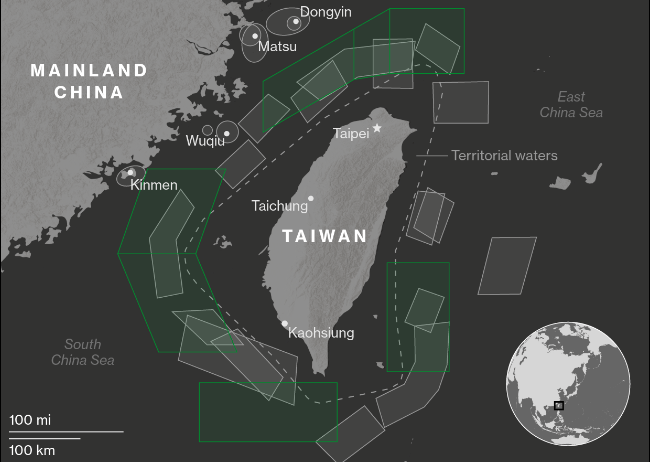
The statement came after the People's Liberation Army (PLA) completed a series of exercises covering a large area around Taiwan. During the drills, the PLA simulated a two-day blockade scenario, accompanied by live-fire drills circling the island.
China also test-fired long-range projectiles into the Taiwan Strait, one of the world's busiest shipping lanes. While the intensity was said to be less intense than the major exercises in 2022, these maneuvers were still seen as a strong signal and increased pressure on Taipei.
Meanwhile, President Donald Trump initially responded calmly, describing the exercises as a long-standing activity China has been conducting in the region. This comment contrasted with the stance of several major democracies, which were quicker to condemn Beijing's actions and considered them to be a risk of escalation.
The European Union, the United Kingdom, France, Germany, Australia, New Zealand, and Japan were among those expressing concern. China rejected the criticism and asserted that Taiwan is its internal affair, while accusing "external interference" of fueling the tensions.
Taiwan welcomed international support and stated that it would work with the US and "like-minded" countries to maintain a rules-based international order. This situation occurs amidst the dynamics of US-China relations, which have recently been relatively stable, but remain fragile due to issues of security, trade, and strategic supply chains.
Market Impact: Geopolitical tensions typically trigger a "risk-off" mode, so gold and silver tend to receive a boost as safe-haven assets—although gains could be restrained if profit-taking occurs or the dollar strengthens. Oil has the potential to rise due to the emergence of a "risk premium" related to the risk of trade disruptions in the region, but its movements remain heavily influenced by fundamental factors such as OPEC+ policies, global supply, and demand. (asd)
Source: Newsmaker.id