Will the Fed Cut Interest Rates Amid Chaos?
Current US Shutdown Developments
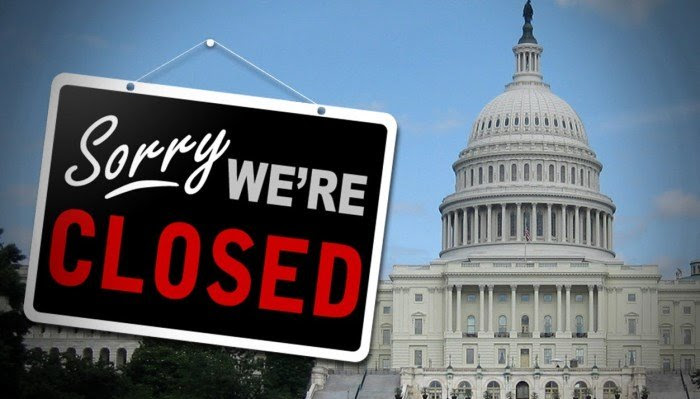
The United States federal government remains shut down, entering its fourth week since government funding ran out on October 1, 2025. This means many non-essential federal offices are closed, hundreds of thousands of employees are furloughed, and some public services are operating at a standstill. Negotiations in Congress remain deadlocked: Republicans are divided over how long to extend stopgap funding, while Democrats are withholding support until there is assurance that the Medicare (ACA) subsidies will expire at the end of the year. As a result, there is no quick path to reopening the government, and they are now talking about a new compromise target of around the end of November, but that is also uncertain. This prolonged shutdown is intensifying political tensions as both parties blame each other.
So, can the Fed still cut interest rates despite the shutdown?
The answer is: yes. The Fed (the US central bank) uses its own funds, not the annual budget currently stalled in Congress, so operationally, the FOMC continues to meet normally, and legally, they are still allowed to change interest rates even while the government is shut down. The Fed is currently expected to cut its benchmark interest rate by around 25 basis points at its end-of-month meeting, as they see the US economy starting to weaken and the labor market appears to be slowing. The problem is, the shutdown has delayed the release of much official economic data (jobs, inflation, and household spending) because the federal statistics office is also affected. So, the Fed is flying blind: they want to cut to support the economy, but they lack real-time data to be sure of the extent of the weakening. This makes the rate cut decision feel riskier, but not impossible.
The relationship between the shutdown, interest rates, XAU, XAG, and the USD (US dollar)
Symptom-wise, the shutdown created uncertainty and fear about the US economy, causing money to flee to safe assets. Therefore, in the early stages of the shutdown, gold soared to a new record above $4,300/oz for two reasons: increased safe-haven demand, and the market's growing confidence that the Fed would cut interest rates, which made the dollar's yield seem less attractive compared to gold. At the same time, the US dollar itself was shaky because the market read, "Okay, the US economy is facing political turmoil and the Fed is going to be more dovish," so yield expectations dropped and the dollar's appeal weakened slightly.
Silver (XAG) usually follows gold sentiment due to its status as a hedge, but it also has an industrial side. This means that if the market narrative is "the US economy is slowing due to the shutdown," XAG can be more volatile than gold. However, if the narrative shifts to "global risk-on," for example, optimism about a US-China trade deal that makes the global growth outlook seem positive, gold and silver can quickly correct as people move out of safe havens, while the US dollar can stabilize or even strengthen if US yields also rise. We've seen this scenario in recent days: when news of the US-China trade deal becomes more positive, global stocks and cyclical commodities like oil and copper rise, while gold and silver are immediately hit by profit-taking.
Practical conclusion for traders:
As long as the shutdown remains unresolved and the Fed remains leaning toward a rate cut, the underlying bias remains pro-gold/pro-silver, tending to make the US dollar fragile, as the big story is "political uncertainty, a slowing economy, and falling interest rates." But the gold/silver rally isn't a straight line upwards: whenever global tensions ease (e.g., US-China trade peace, risk sentiment returning), the market will shift back to growth stocks/commodities, and precious metals could immediately fall sharply. Therefore, the direction of XAU/XAG is currently highly sensitive to two headlines: whether the US shutdown will be resolved quickly or prolong, and whether the Fed actually cuts interest rates as aggressively as market expectations. If both are pro-risk (the shutdown is about to be resolved + the Fed isn't that dovish), gold/silver is vulnerable to a correction, and the dollar can breathe. (asd)
Source: Newsmaker.id