What's Really Going On? Why Are Crude Oil Prices Plummeting?
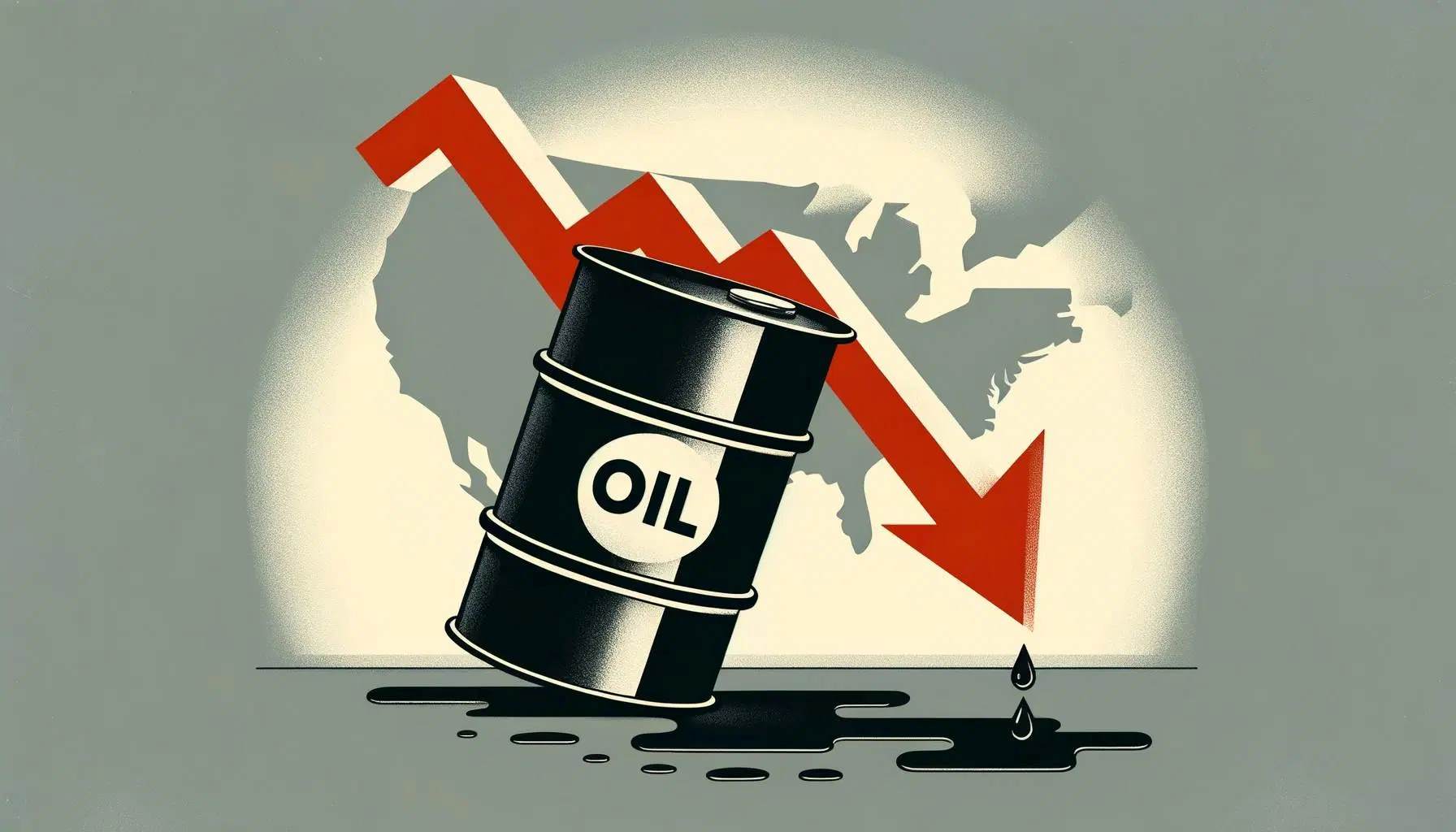
Brent crude oil prices remained at $61 on Friday (October 17th), continuing their decline to their lowest level in five months. Pressure stems from a combination of a projected global supply surplus, rising US oil inventories, and weakening demand prospects due to US-China trade tensions.
Fundamentals: Supply Surplus and Weak Demand
According to the latest report from the International Energy Agency (IEA), the global oil market is expected to face a significant supply surplus in 2026, as production from OPEC+ countries and the United States increases. The report warns that global demand growth remains below expectations, primarily due to economic slowdowns in China and Europe.
"Global demand growth is slowing, while production remains high. This imbalance has the potential to keep prices under pressure for longer than expected," the IEA wrote in its monthly report.
Furthermore, US crude oil stockpiles data from the Energy Information Administration (EIA) showed a weekly increase of 4.3 million barrels, well above market expectations. This surge in inventories indicates weakening domestic consumption—an additional signal that the market is oversupplied.
Renewed trade tensions between the United States and China have also worsened sentiment. Washington is reportedly considering new tariff increases on Chinese technology products, a move feared to slow industrial activity and suppress global energy demand.
Pressure from Shutdowns and Economic Uncertainty
In addition to supply and demand factors, the US government shutdown, which has continued into its third week, has added to market uncertainty. Disruptions to economic data and government activity have weakened risk sentiment in the energy sector.
Investors are now tending to hold positions while awaiting clarity on US fiscal and monetary policy, especially ahead of the Federal Reserve's interest rate decision at the end of October.
Technical: Bearish Trend Remains Dominant
Technically, Brent oil prices have shown a strong bearish trend in recent weeks. Prices are now moving below their 20-, 50-, and 200-day moving averages, indicating a medium-term downtrend remains dominant.
The Relative Strength Index (RSI) is approaching the oversold level but has not shown any significant signs of a reversal. The main support zone is around USD 61.00–60.50 per barrel, while strong resistance lies at USD 62–63 per barrel.
If selling pressure persists and the USD 61 level is broken, analysts predict Brent prices could potentially continue their decline towards the USD 59 per barrel range. Conversely, a technical rebound could only occur if prices are able to break through resistance above USD 66.
Future Outlook: Risks Remain to the Downside
Energy market analysts assess that the downward trend in oil prices is likely to continue in the short term.
"The fundamentals remain very bearish. Oversupply, weak demand, and geopolitical uncertainty are a difficult combination for the oil market," said an analyst from Reuters Energy Desk.
Although several major producers, such as Saudi Arabia and Russia, have hinted at possible production adjustments in the fourth quarter, the market remains skeptical whether such measures will be sufficient to stabilize prices.
Source: Newsmaker.id