
Trending
Oil
Source: Newsmaker.id
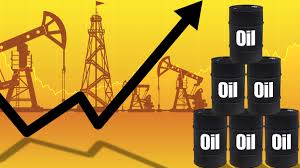
Oil prices strengthened again during Monday's trading (Oct 12) after facing downward pressure earlier in the session. Brent rose approximately 0.7% to US$105.41 per barrel, while WTI gained 0.6% to US$92.42. The market remains caught in a tug-of-war between the prospect of additional Russian supply and rising risks of energy disruptions due to escalating tensions in the Middle East.
Supply pressures mounted again after the Iran-backed Houthi group claimed responsibility for an attack on Riyadh International Airport that killed 13 people and injured over 300 others. Further attacks occurred on Sunday, while several tankers were also reported to have been attacked near Oman and the Strait of Hormuz. These conditions have raised concerns that regional escalation could hinder the recovery of Middle Eastern oil exports.
On the other hand, the market is looking at potential additional supply from Russia. President Donald Trump stated that Russia would soon ship over 300,000 tons of diesel—approximately 2.25 million barrels—to the US and global markets. However, the impact remains questionable as Russia's refining capacity has faced disruptions. The release of an additional 500,000 tons of diesel is also considered equivalent to only about one day of US consumption, making it insufficient to significantly alter the market balance.
Expectations regarding a Russia-Ukraine energy truce have also acted as a factor tempering oil price gains. Trump stated that both countries had agreed to halt attacks on energy facilities, but Ukraine is still awaiting details of the agreement, and Russia has yet to confirm. Meanwhile, the International Energy Agency (IEA) has again urged member nations to accelerate the release of diesel reserves to alleviate supply pressures.
Newsmaker observes that oil is currently caught in a battle between additional supply and a geopolitical risk premium. If Russian supplies and an energy truce actually materialize, oil prices could face downward pressure. However, attacks on Riyadh and tankers near the Strait of Hormuz pose a far greater upside risk should they begin to disrupt physical oil flows. Goldman Sachs estimates the current geopolitical risk premium at over US$20 per barrel, indicating that Middle East tensions remain a crucial factor in determining the direction of oil prices.
Source: Newsmaker.id