
Trending
Global & Economy
Source: Newsmaker.id
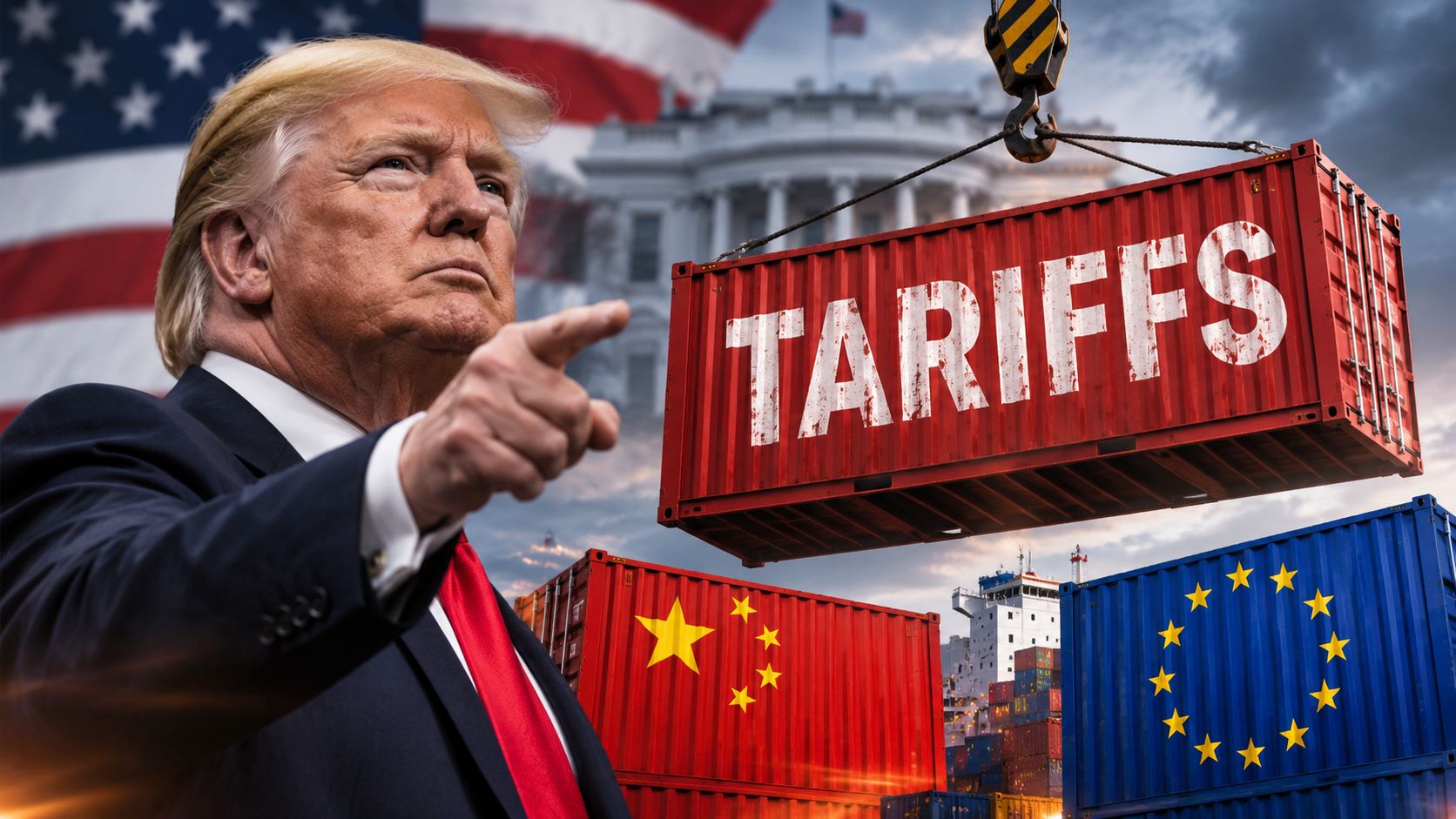
The United States is preparing to impose a new round of tariffs on products from China, the European Union, and several other nations. This move is part of the Donald Trump administration’s effort to revive an import tariff agenda that was previously ruled unconstitutional by the US Supreme Court. The policy targets countries accused of maintaining excess production capacity, which allegedly harms domestic US companies.
Tariffs on Chinese imports are set at 20% under existing agreements, but could rise to 40% should trade negotiations between the two nations fail. Meanwhile, products from the European Union will face a 15% tariff—consistent with current trade agreements—with the potential for an increase to 20%. The policy is currently undergoing a public consultation process and remains subject to change before implementation.
Other key US trading partners are also being targeted. Products from Japan, South Korea, and Switzerland will face a 15% tariff, with the potential for these rates to climb to 20% for Japan and Switzerland, and 25% for South Korea. India could face a 17% tariff—contingent upon the finalization of a trade deal with Washington—with the possibility of it rising to 25%.
Indonesia is also included on the list of affected nations, alongside Malaysia, Singapore, Thailand, Vietnam, Taiwan, Bangladesh, and Cambodia. Furthermore, Washington is raising tariffs on certain Brazilian products following an investigation into that country’s digital policies and trade practices. Certain strategic commodities—such as oil, gas, and food products that cannot be produced domestically in the US—will be exempted from the new tariffs.
This plan threatens to heighten global trade uncertainty and may trigger responses from US trading partners. China has characterized the proposed tariffs as a political maneuver, urging both sides to maintain their current trade truce. The European Union has also rejected accusations that it is a source of structural excess capacity, though it has yet to signal any firm intention to take retaliatory measures. The implementation of new tariffs is being pursued under Section 301 of the Trade Act of 1974, which authorizes the U.S. to impose import duties following investigations into trade practices deemed unfair. This policy remains subject to change following a public consultation process, with final implementation potentially beginning as early as January. Developments in U.S. negotiations with trading partners will be a key focus for the market, as they could impact inflation, economic growth, trade flows, and sentiment toward global risk assets. (arl)
Source: Newsmaker.id