
Trending
Gold
Source: Newsmaker.id
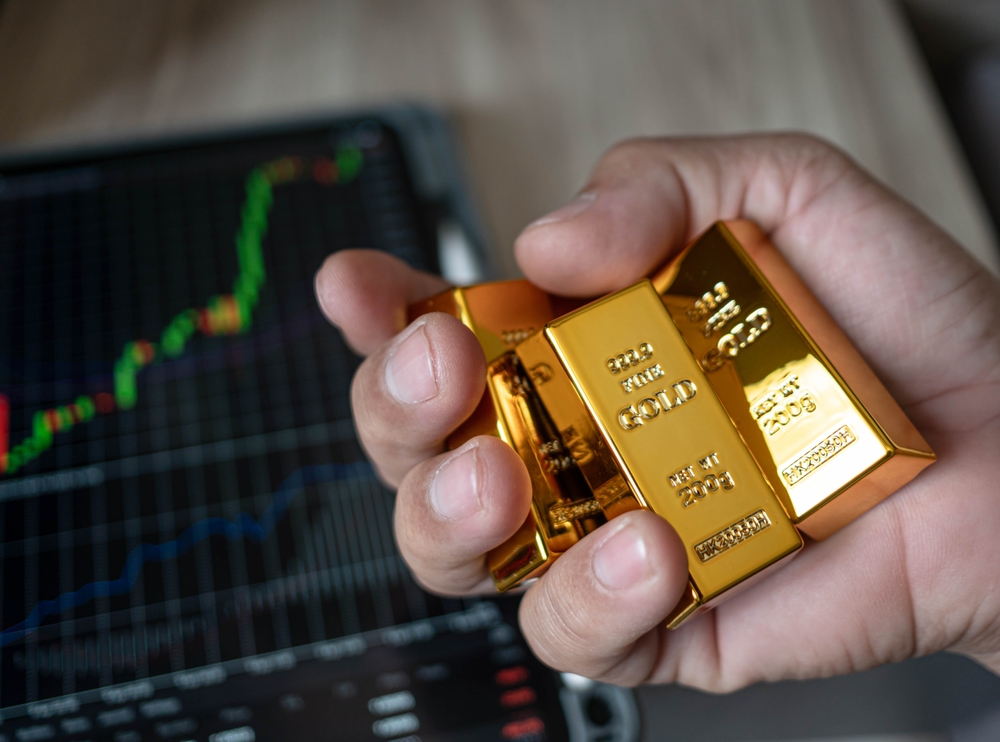
Global gold prices faced renewed pressure during Thursday’s (November 26, 2026) trading session, following a brief recovery the previous day. Spot gold (XAU/USD) fell 0.2% to US$3,578.72 per troy ounce as of 8:17 AM Singapore time. This comes after the metal had dipped below the US$3,500 mark during Wednesday’s trading, only to close 0.9% higher. The latest weakness follows a U.S. inflation report indicating persistent price pressures, reinforcing expectations that the Federal Reserve (The Fed) will raise interest rates again in the near future. Meanwhile, trading activity is expected to be more subdued as U.S. financial markets remain closed for the Thanksgiving holiday; in an environment of low liquidity, price movements may become more sensitive to shifts in market sentiment.
From a fundamental perspective, the U.S. core Personal Consumption Expenditures (PCE) price index—a key inflation gauge—rose 3.3% year-on-year in October, marking its highest level since 2023. This figure confirms that inflationary pressure remains well above the Fed’s 2% target, providing a strong rationale for the central bank to maintain a restrictive monetary policy. The high core inflation rate is of particular concern, as this metric excludes volatile food and energy components, thereby offering a clearer picture of the underlying price pressures within the economy. These developments have bolstered expectations for an interest rate hike at the December meeting and suggest the possibility of further tightening throughout 2027, should inflation fail to show a sustained slowdown.
Gold is also under pressure due to the ongoing conflict involving the United States and Iran, which has driven up energy prices throughout the year. Surging oil and distribution costs have contributed to heightened global inflationary pressures, compelling several major central banks to keep interest rates high. This situation poses a challenge for gold, as the precious metal does not generate interest income and tends to become less attractive when bond yields rise. In recent weeks, a strengthening US dollar has also constrained demand for gold, making the metal more expensive for buyers using currencies other than the dollar. Meanwhile, the United States' planned implementation of new import tariffs could potentially drive up the prices of consumer goods, further complicating efforts to control inflation.
In terms of market movement, gold continues to exhibit high volatility; it briefly dipped below the US$3,500 level before rebounding during Wednesday’s trading session. This recovery indicates buying interest at lower price points, though the gains have not been strong enough to shift the short-term sentiment, which remains influenced by expectations of interest rate hikes. On Thursday, the Bloomberg Dollar Index remained relatively stable, while the price of silver rose by 0.6% to US$41.51 per troy ounce. This divergence suggests that each precious metal is being driven by distinct demand factors and market sentiments. Given the thinner trading liquidity due to the Thanksgiving holiday, gold could experience sharper fluctuations should any new developments arise regarding monetary policy, inflation, or geopolitics.
Gold’s movement around the US$3,575 level indicates that fundamental pressures continue to weigh on the market, following a 3.3% reading for the US core PCE inflation—a figure that reinforces expectations for Federal Reserve interest rate hikes. From a technical perspective, the US$3,550 area serves as the nearest indicative support level, followed by the psychological threshold of US$3,500, which was briefly breached during Wednesday’s trading. Meanwhile, resistance lies in the US$3,600 to US$3,650 range. If gold can maintain its position above US$3,550, there remains a possibility for a recovery toward US$3,600, particularly if the US dollar weakens once again. However, if selling pressure intensifies and the price breaks below US$3,500 on a sustained basis, the risk of a correction toward US$3,450 could re-emerge. Consequently, the short-term outlook for gold remains bearish, with expectations regarding Federal Reserve interest rate hikes, movements in the US dollar, and geopolitical uncertainty serving as the primary factors that will determine the future direction of prices.